

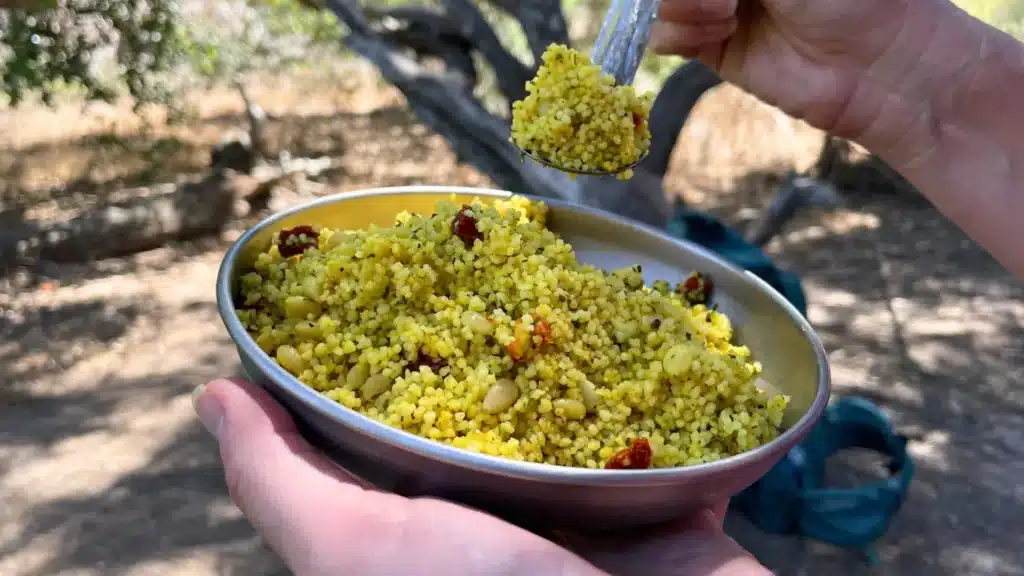
Imagine this: you’re perched on a rock at sunset, boots off, pack down, and in your hand is a satisfying spoonful of a backpacking couscous recipe packed with sun-dried tomatoes, herbs, and bold flavor. Whether you cold soak it on the trail or serve it warm with hot water, this meal delivers comfort without the hassle.
Our Sun-Dried Tomato Couscous homemade backpacking meal is lightweight, calorie-dense, and trail-tested—perfect for everything from quick overnights to ambitious thru-hikes. With shelf-stable ingredients and prep that’s practically foolproof, it’s ideal for DIY backpacking meals and adventurers who prefer to skip the gourmet gear.
Table of Contents
- Quick Recipe Highlights
- What Hikers Are Saying
- As Seen in Backpacker Magazine
- Why This Backpacking Couscous Recipe is a Game-Changer
- Recipe: Home & Field Instructions
- How to Make This Couscous Backpacking Dinner Work Anywhere
- DIY Backpacking Meal Variations & Ingredient Swaps
- Trail Tips & Mistakes to Avoid for Homemade Backpacking Meals
- FAQs About This Backpacking Couscous Recipe
- Final Thoughts: Big Flavor, Lightweight Load
- Take This Recipe — and More — on Your Next Adventure
Quick Recipe Highlights
✔️ Calorie-efficient - over 600 calories per serving at 127 cal/oz
✔️ Cold soak compatible - no stove required!
✔️ Bursting with bold, Mediterranean flavor
✔️ Made with familiar, grocery store ingredients
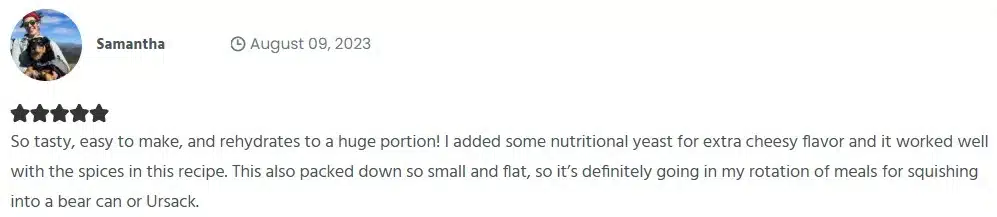
What Hikers Are Saying

As Seen in Backpacker Magazine
Backpacker Magazine gave our Sun-Dried Tomato Couscous recipe a real-world test — and it passed with flying colors. Watch the quick video below to see how easy it is to prepare (and why it’s become a trail favorite).
Why This Backpacking Couscous Recipe is a Game-Changer
Couscous is often mistaken for an ultralight staple—but let’s set the record straight: on its own, couscous clocks in at just 105 cal/oz, which doesn’t meet the bar for ultralight by Backcountry Foodie standards. The game-changer here is the addition of calorie-rich fats like olive oil and pine nuts, which boost this meal’s caloric density to 127 cal/oz—right in the sweet spot for high-performance trail fuel.
But what truly makes this recipe stand out? You can make it with ingredients from your local grocery store. There’s no need to hunt down freeze-dried powders or order online. Just couscous, dried herbs, pine nuts, and sun-dried tomatoes—simple, shelf-stable, flavorful.

Recipe: Home & Field Instructions
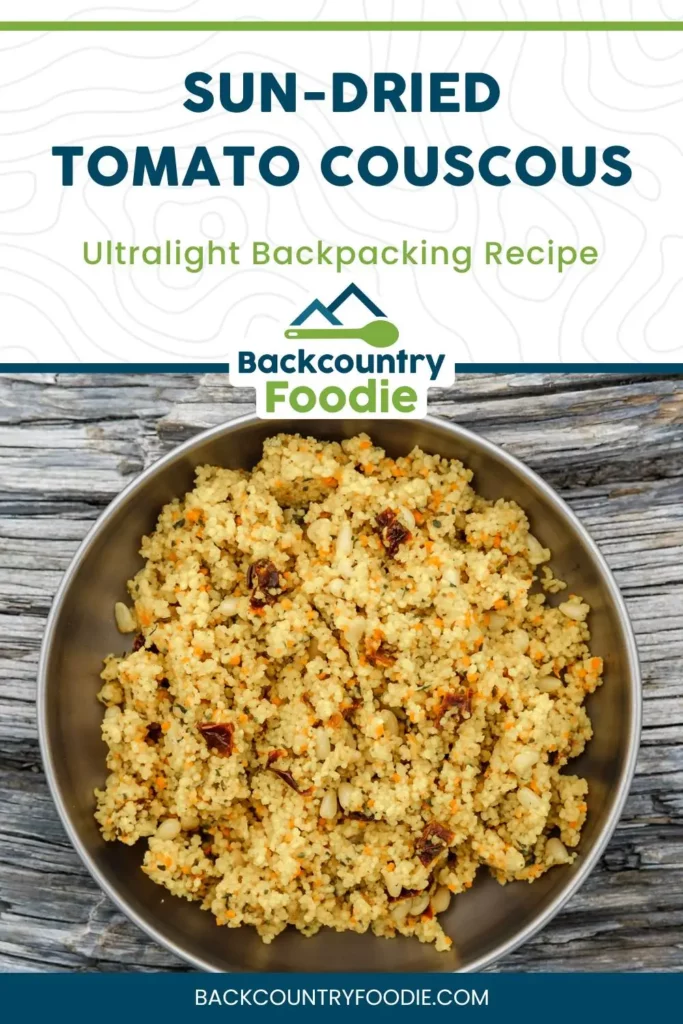
Sun-Dried Tomato Couscous
EQUIPMENT
- kitchen scissors, optional
- leakproof bottle, for olive oil
- camping stove, optional
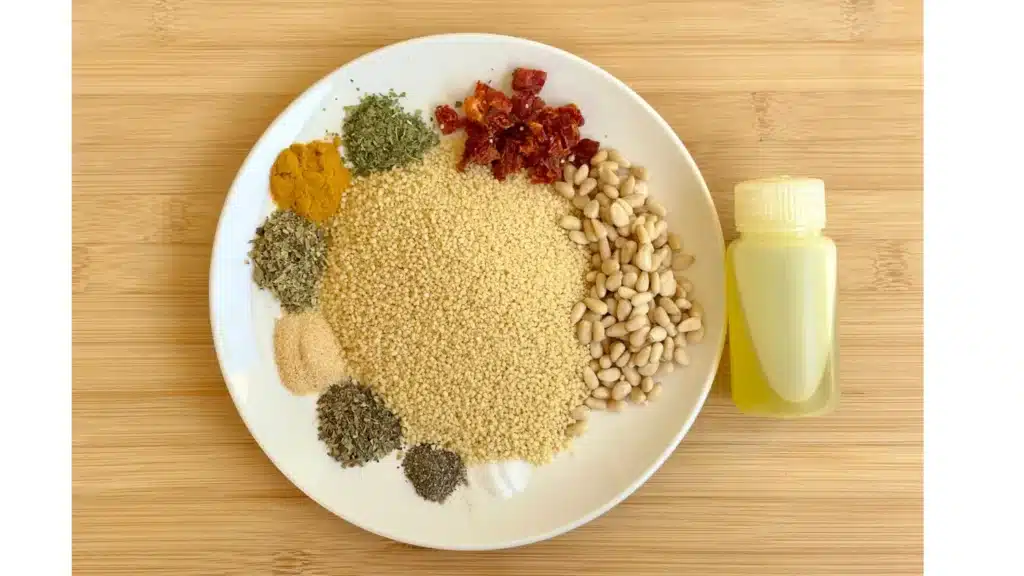
INGREDIENTS
- 3 piece (15 g) sun-dried tomatoes, dried, diced
- ½ cup (86 g) couscous
- 2 Tbsp (20 g) pine nuts
- ½ tsp (0.2 g) parsley, dried
- ½ tsp (0.5 g) oregano, dried
- ½ tsp (0.3 g) basil, dried
- ½ tsp (1 g) turmeric, ground
- ½ tsp (1.5 g) garlic powder
- ¼ tsp (0.6 g) black pepper
- ⅛ tsp (0.8 g) table salt
- 1 Tbsp (14 g) olive oil
- 6 oz (180 mL) water
Dietary substitutions available — see Substitutions below.
INSTRUCTIONS (per serving)
HOME
- Dice the sun-dried tomatoes. Kitchen scissors work well for cutting the tough tomatoes.
- Put the sun-dried tomatoes and remaining dry ingredients in a bag or container for use in the backcountry.
- Pack 1 Tbsp (14 g) of olive oil in a leakproof container to be added when the meal is consumed. Double-bag the oil in case of a leak.
FIELD
- Add 6 oz (180 mL) of hot or cold water to the bag or container.
- Stir to mix well and let stand until the couscous and sun-dried tomatoes are fully rehydrated.
- Add 1 Tbsp (14 g) of olive oil.
- Stir to mix well and enjoy!
NOTES
SUBSTITUTION
- Reduced-Sodium: Replace the table salt with a salt substitute, as desired.
RECIPE LABELS
- Our downloadable recipe labels are designed to print on Avery #18163 (2″ x 4″) Shipping Labels.
NUTRITION (per serving)
Did you enjoy this recipe?
Pin it and share it with your fellow hikers.
How to Make This Couscous Backpacking Dinner Work Anywhere

This couscous backpacking dinner was built with trail flexibility in mind. Whether you’re team freezer bag cooking or a cold-soak convert, it performs beautifully—no culinary skills required.
Cold Soak Friendly
- No stove? No problem. Couscous rehydrates easily with cold water, making it an ideal choice for lunch or dinner when you’re trying to cut weight. Just add water, stir, and let it sit for about 30 minutes—longer at altitude or in cold temps. It’s a popular method for thru-hikers aiming to save time and simplify meal prep.
Trail Tip: Don’t wait until you’re starving to soak your meal—start it 30 minutes before camp or on your last break.
Hot Prep Optional
- If you’re carrying a stove, hot water speeds things up to just a few minutes. The result is fluffy, warm couscous that’s extra satisfying after a long day.
Meal Volume & Hydration
- One serving comes in around 5 oz (dry) and yields a hearty, high-volume meal—enough to fill you up without weighing you down. With 636 calories, it strikes a strong balance between volume and fuel.
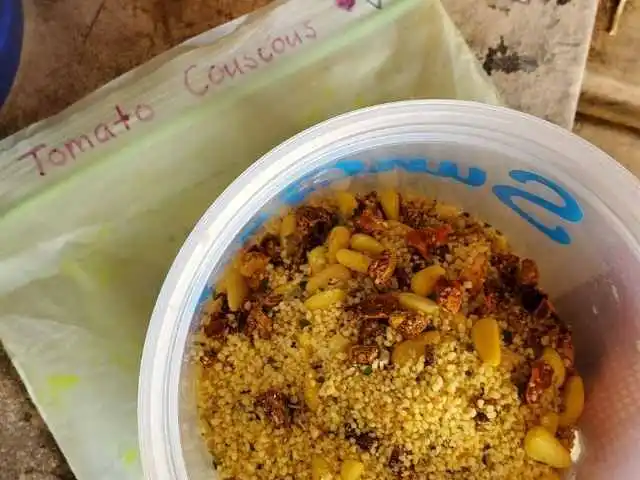
Trail Tip: Rehydrate in a wide-mouth peanut butter jar or Vargo BOT—these make stirring easier and seal well during soak time. Add the olive oil after rehydrating to avoid oil slicks and clumping.
DIY Backpacking Meal Variations & Ingredient Swaps
Don’t have pine nuts or trying to skip oil? No worries. This couscous is flexible enough to match your pantry, diet, and mileage goals. Whether you’re swapping for allergies, cost, or flavor, here’s how to make it your own:
Ingredient Swaps
- Pine nuts → Slivered almonds or sunflower seeds
- Olive oil → Canola oil, butter powder, or MCT oil powder
- Sun-dried tomatoes → Freeze-dried cherry tomatoes or dried red bell pepper
- Couscous → Instant quinoa or crushed ramen noodles
Dietary Tweaks
- Vegan? This recipe already has you covered.
- Gluten-free? Use instant quinoa or a certified gluten-free grain.
- Low-sodium? Skip the salt and reduce the amount of dried tomatoes.
Flavor Boosts
- Add lemon pepper or True Lemon for brightness
- Stir in red pepper flakes for heat
- Add capers or dried olives for a briny twist
Trail Tip: Always test your swaps at home or on a shakedown hike. What works at home doesn’t always translate to high elevation or cold temps. If you’re not excited to eat it, you probably won’t.
Trail Tips & Mistakes to Avoid for Homemade Backpacking Meals
This may be a simple meal, but a few smart tweaks can make the difference between “meh” and “trail magic.”
✅ Do This
- Pre-cut sun-dried tomatoes – kitchen scissors work well
- Soak longer at altitude or in cold temps
- Add olive oil after rehydrating
❌ Don’t Do This
- Don’t skip salt unless necessary
- Don’t use narrow-mouthed containers
- Don’t store oil loose in your pack
Trail Tip: Test this meal before a long hike. Even simple meals can taste different when you’re low on energy or adjusting to altitude. Your trail kitchen should be as dialed in as your gear list.
FAQs About This Backpacking Couscous Recipe
Can I cold soak couscous for backpacking?
- Yes! Couscous is one of the easiest grains to cold soak. Add room-temp water, stir, and let sit for 30–45 minutes (longer in cold/high conditions). Add olive oil after soaking.
Why does couscous take longer to soak at altitude or in cold water?
- At higher elevations, water boils at a lower temperature, so hot meals don’t rehydrate as quickly. And with cold soak, colder water (like 50°F from snowmelt) slows absorption compared to warmer water (65°F). Plan on 45–60 minutes in alpine conditions versus 30 minutes at lower elevations.
Is this couscous recipe shelf-stable?
- Yes. All the ingredients are shelf-stable and safe to store until the manufacturer’s printed Best By Date (BBD).
- For olive oil, keep it sealed in a leakproof container, stored in a cool place, and use it before its BBD. Always check for off smells or flavors before use.
Is couscous gluten-free?
- No. Swap with dehydrated or crisped quinoa for a gluten-free option.
Can I make this backpacking couscous without olive oil?
- Yes, but you’ll lower the calorie count by 120 calories per serving.
Which container should I use to cold-soak on the trail?
- A wide-mouth peanut butter jar or Vargo BOT is ideal for rehydration and eating. Be aware that if using a Talenti gelato container, the meal will be difficult to stir as the couscous will expand to fill the entire container.
Final Thoughts: Big Flavor, Lightweight Load
This backpacking couscous meal proves you don’t need freeze-dryers, fancy powders, or gourmet kits to eat well on trail. With just a few grocery store staples, some smart fats, and bold seasoning, you can enjoy a high-calorie, cold-soak-ready meal that strikes the perfect balance between simplicity and satisfaction.
To recap, this meal is:
- Lightweight and easy to prep with no stove required
- 127 cal/oz—high enough to fuel long days
- Made from everyday ingredients you likely already have
- Adaptable for different diets and taste preferences
Whether you’re gearing up for your first overnight or your next thru-hike, this recipe has your back—without weighing it down.
The best trail meals don’t just fill you up—they keep you moving. Simple, smart, and satisfying is the Backcountry Foodie way.
Take This Recipe — and More — on Your Next Adventure
Backcountry Foodie is your go-to resource for over 250 backpacking dietitian-created recipes and a one-of-a-kind automated meal planning tool. The meal planner even creates itemized shopping lists for you! Meal prep has never been easier.













2 Comments
I liked this but felt it could use more flavor. Next time I might add more seasoning or the olives or capers, or I might just add a crumbled bullion cube to the mix.
Flavorful and easy to prepare!