

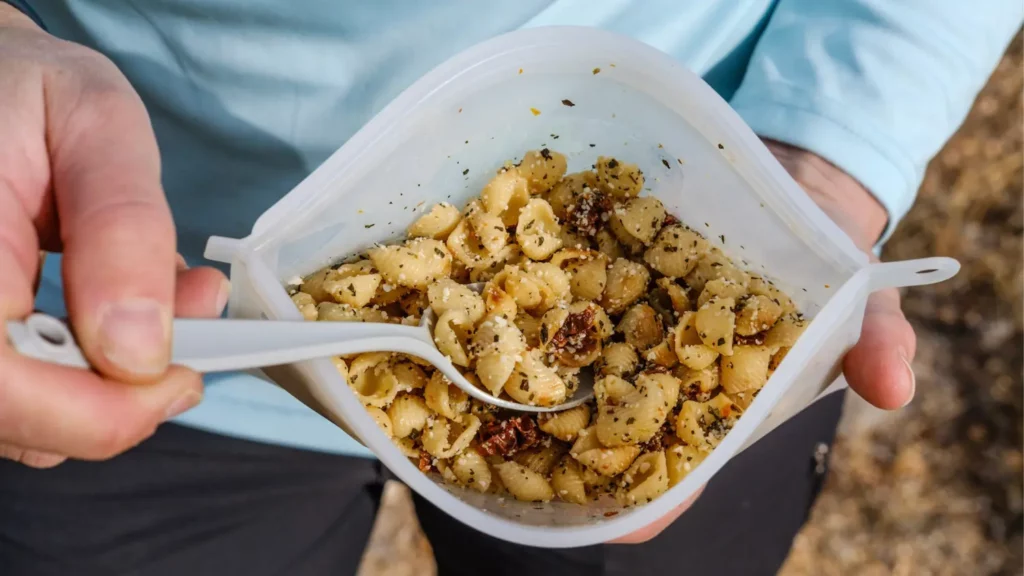
Have you ever made homemade pesto before? You may have thought it couldn’t get much easier. You were wrong! Backcountry Foodie’s cold soak backpacking pesto recipe takes just a few minutes to prepare and packs a surprisingly flavorful punch with no fresh basil required. The best part? You don’t have to clean the food processor.
At Home:
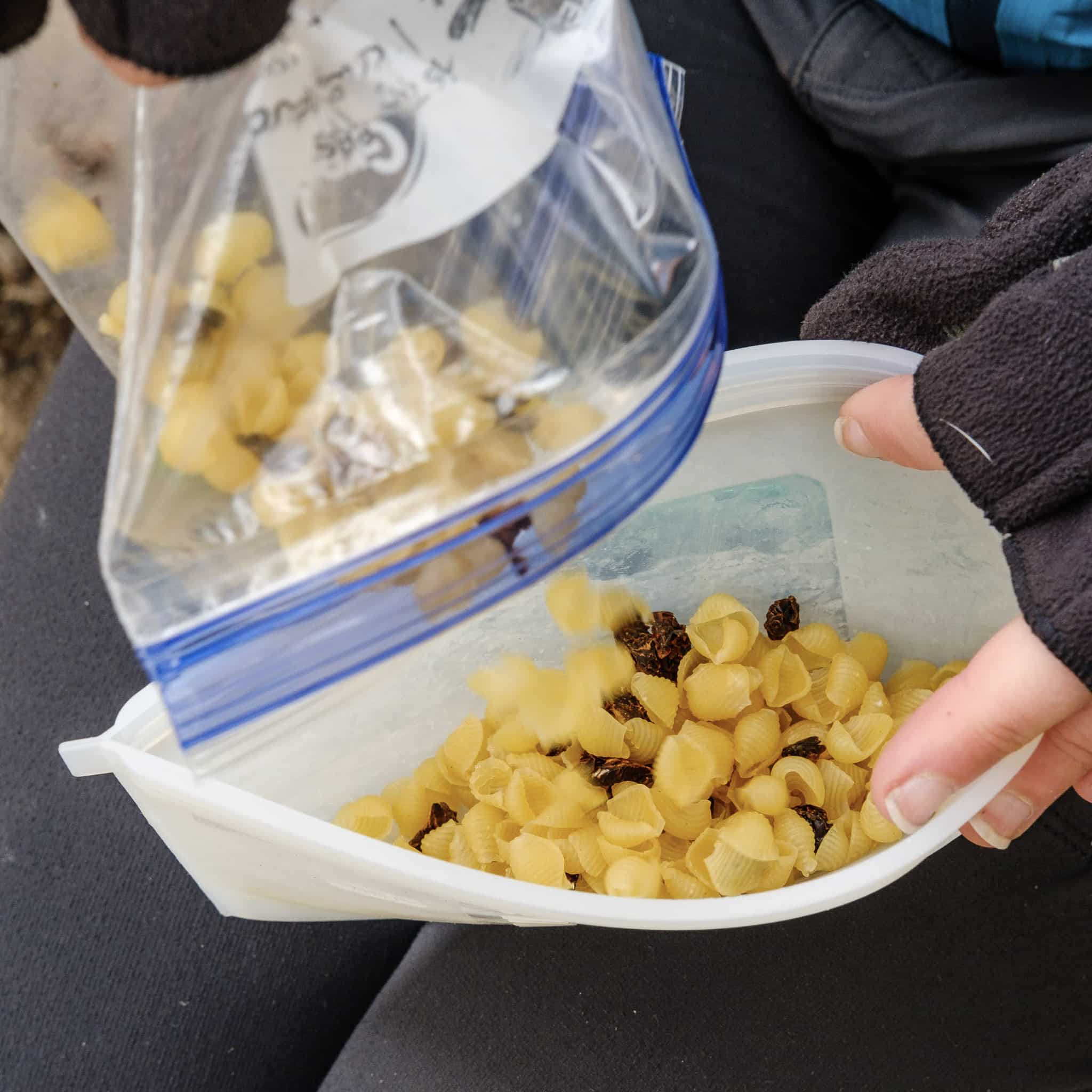
At home, make a “pesto packet” with garlic powder, dried basil, salt, pine nuts, and parmesan cheese. Pack olive oil separately. On the trail, simply rehydrate your pasta and sun-dried tomatoes, then add the other ingredients to make your sauce.
In the Field:
Depending on your style, you can make this a hot meal or a cold soak dinner. If you cold soak it, be sure to use precooked, dehydrated pasta. If you plan to bring a stove and aren’t in a hurry, you can also cook your pasta on the trail. If you’re not familiar with dehydrating your own pasta, consider watching our YouTube video about it.
As Seen in Backpacker Magazine
Backpacker Magazine gave our Sun-Dried Tomato Pesto Pasta recipe a real-world test — and it passed with flying colors. Watch the quick video below to see how easy it is to prepare (and why it’s become a trail favorite).
Need a gluten-free recipe?
Not a problem!
Chickpea pasta makes an excellent gluten-free substitution in this recipe. Even if you aren’t gluten-free, you might consider giving chickpea pasta a try. It contains more protein and fiber than regular pasta and is a great way to add variety. Enjoy!
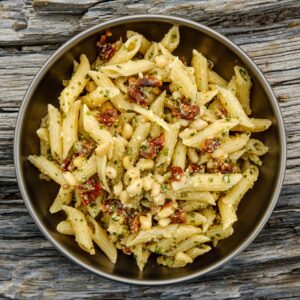
Sun-Dried Tomato Pesto Pasta
EQUIPMENT
- kitchen scissors, optional
- leakproof bottle, for olive oil
- wide-mouth, leakproof container, optional
- camping stove, optional
- insulated meal cozy, optional
INGREDIENTS
- ⅔ cup (52 g) penne pasta, precooked and dehydrated
- 2 piece (10 g) sun-dried tomatoes, dried, diced
- 1 Tbsp (8 g) pine nuts
- 2 tsp (1.4 g) basil, dried
- ¼ tsp (0.8 g) garlic powder
- ⅛ tsp (0.8 g) table salt
- 2 Tbsp (15 g) parmesan cheese, grated
- 2 Tbsp (28 g) olive oil
- 8 oz (240 mL) water
Dietary substitutions available — see Substitutions below.
INSTRUCTIONS (per serving)
HOME
- Put noodles and diced tomatoes in a bag or container to be used in the backcountry. Kitchen scissors work well for dicing tomatoes.
- Put the remaining dry ingredients in a separate bag or container to be stored with the noodles. See meal prep tips below.
- Pack 2 Tbsp (28 g) of olive oil in a leakproof container to be added when the meal is consumed. We recommend double-bagging the oil in case of a leak.
FIELD
- Remove the pesto packet from the noodle bag or container.
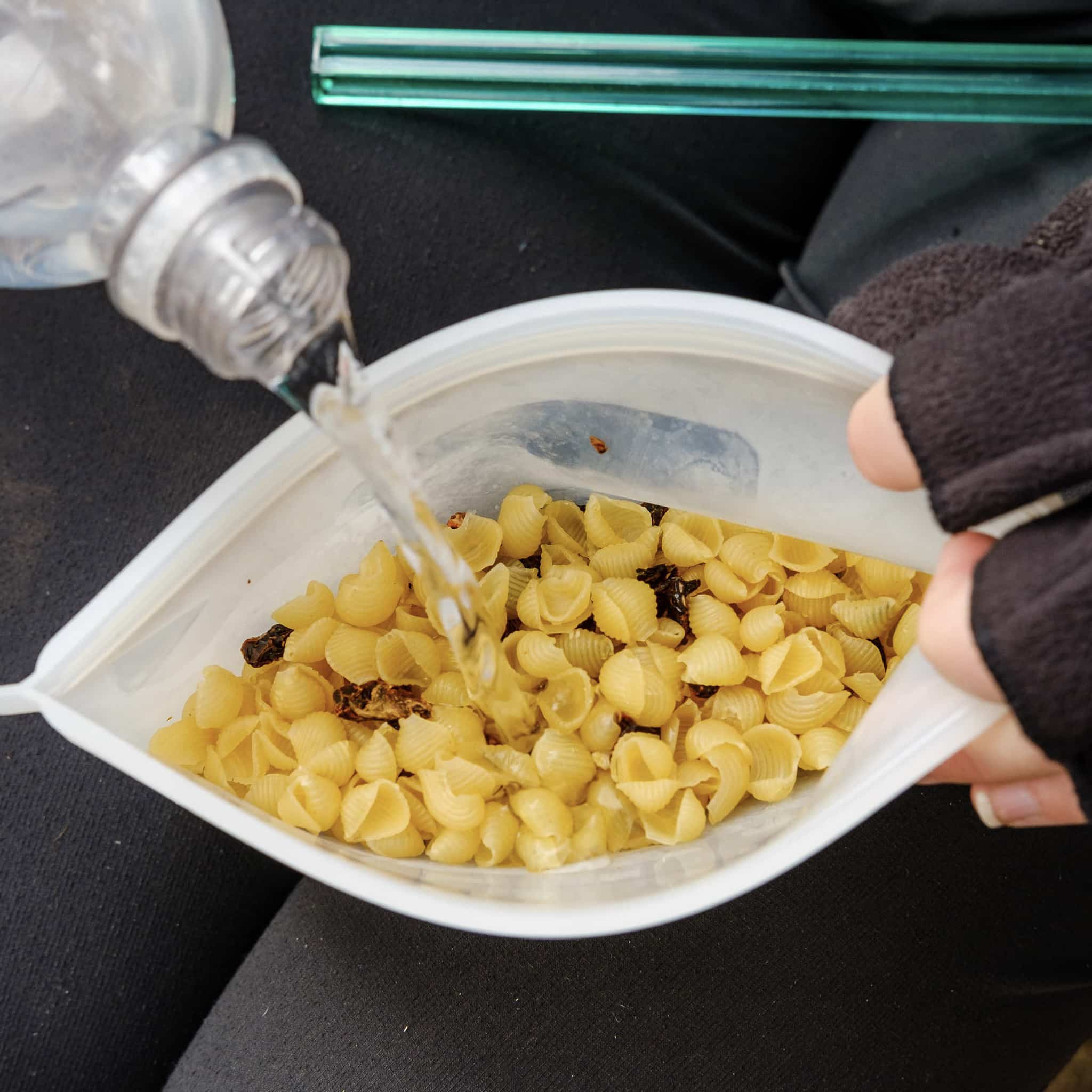
- Add 8 oz (240 mL) of hot or cold water or enough to cover the noodles.
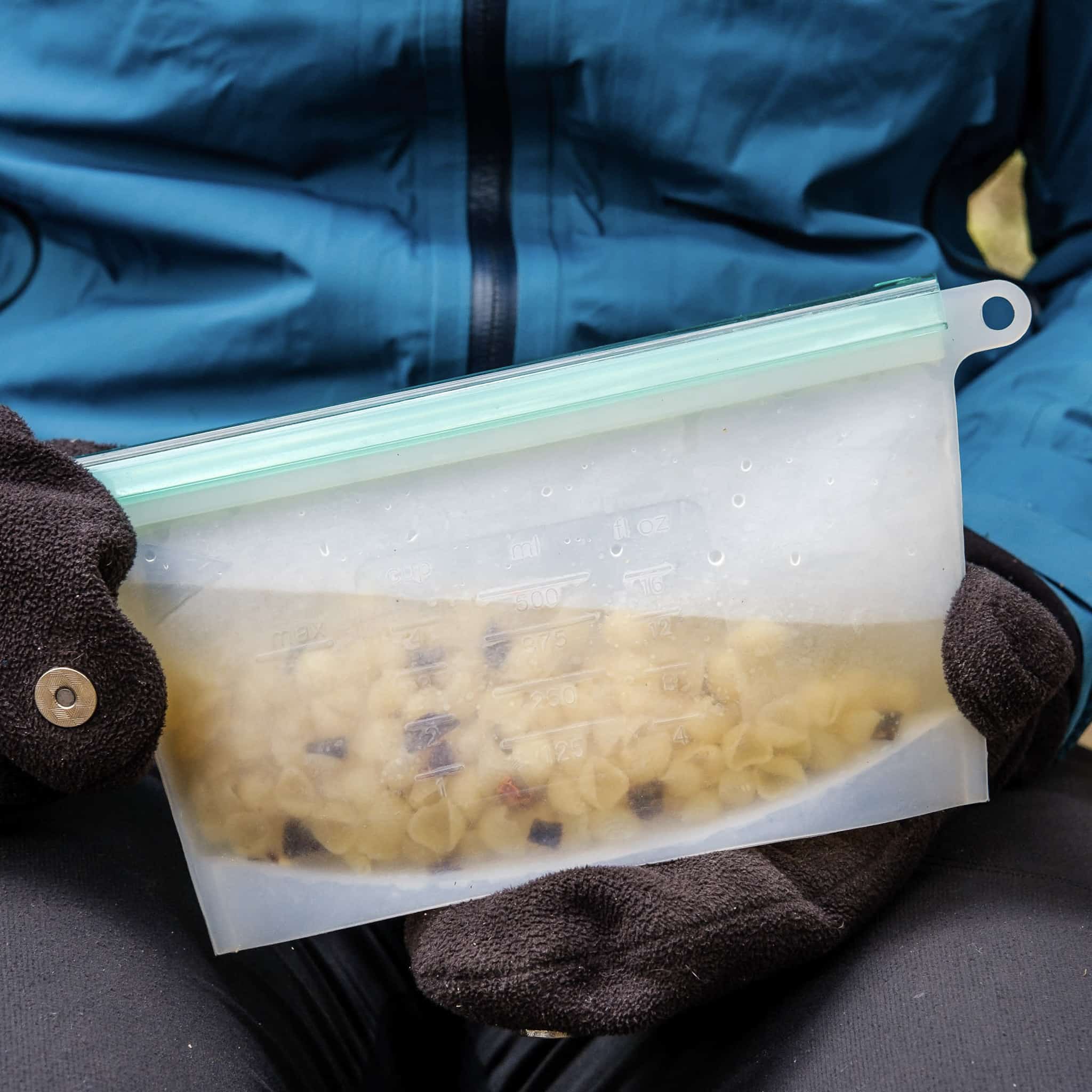
- Let stand until noodles are fully rehydrated. This will take approximately 5 minutes with hot water or 60 minutes with cold water.
- Drain any excess water, following Leave No Trace principles when disposing of wastewater.
- Add pesto packet and 2 Tbsp (28 g) of olive oil to the noodles.
- Stir to mix well and enjoy!
NOTES
SUBSTITUTIONS
- Gluten-Free: Replace the pasta with an equal amount of precooked and dehydrated gluten-free pasta, such as chickpea pasta.
- Vegan: Replace the parmesan cheese with 2 Tbsp grated cashew cheese.
- Heart-Healthy: Replace the parmesan cheese with 2 Tbsp grated cashew cheese.
- Reduced-Sodium: Replace the table salt with a salt substitute, as desired.
MEAL PREP TIPS
- Long-Term Storage: For longer-term storage, pack the parmesan cheese separately and add it to the meal shortly before your trip. Single-serving parmesan packets also work well; approximately 2 (3.5 g) packets = 1 Tbsp. Grated cashew cheese is shelf-stable and can be packed with the other dry ingredients during home preparation.
- Choosing a Container: A wide-mouth, leakproof container, such as a recycled Talenti or large peanut butter jar, works well for cold soak meals.
DEHYDRATING PASTA
- Cook pasta according to the package directions, undercooking by 2 minutes if it will be rehydrated with hot water on the trail. If you plan to cold soak, cook the pasta fully before dehydrating.
- Drain well and spread in a single layer on dehydrator trays.
- Dehydrate at 135°F (57°C) until completely dry and brittle.
- Cool completely before packing in an airtight container.
RECIPE LABELS
- Our downloadable recipe labels are designed to print on Avery #18163 (2″ x 4″) Shipping Labels.
NUTRITION (per serving)
Did you enjoy this recipe?
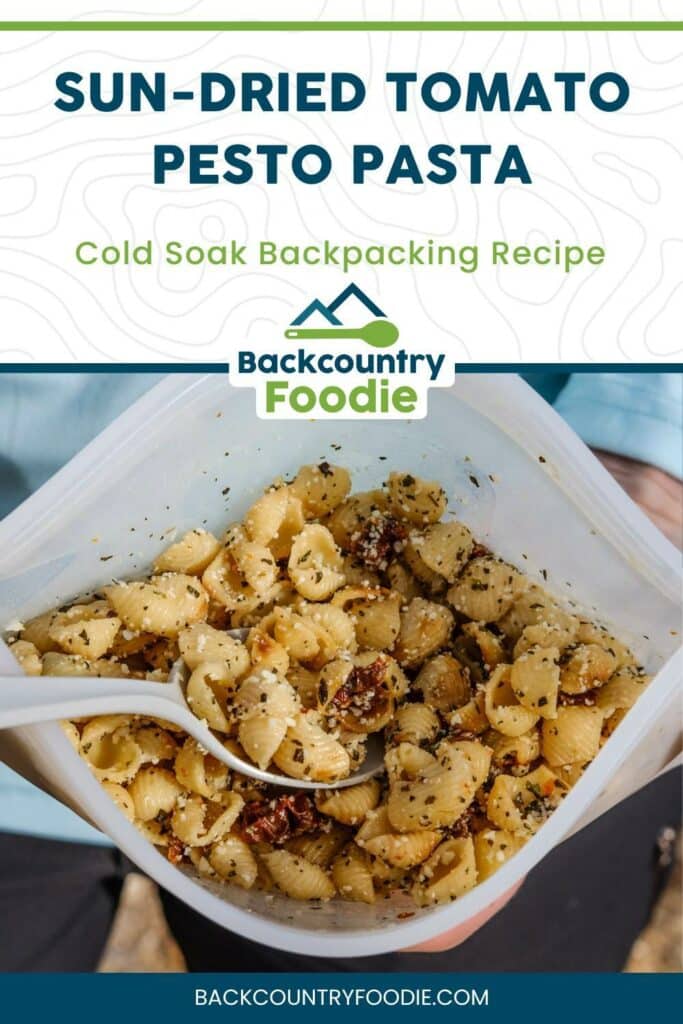
Pin it and share it with your fellow hikers.
Take This Recipe — and More — on Your Next Adventure
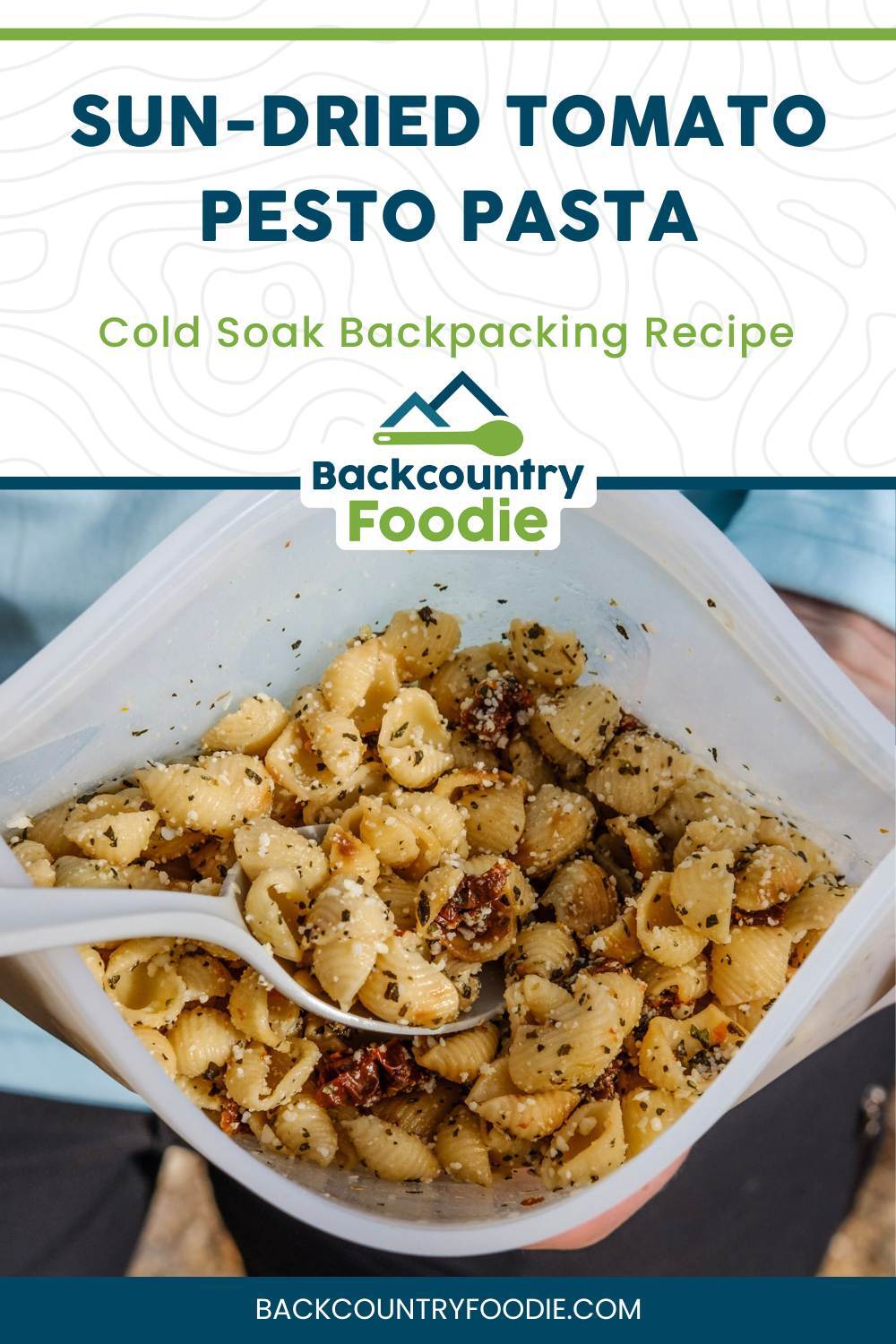
Backcountry Foodie is your go-to resource for over 250 dietitian-created backpacking recipes and a one-of-a-kind automated meal-planning tool. The meal planner even creates itemized shopping lists for you! Meal prep has never been easier.












10 Comments
Is it possible to cold soak dry pasta you buy at the store, then maybe drain, and then add the rest of the dehydrated ingredients and warm water?
Great question. Regular dry pasta can absorb cold water and soften, but it won’t rehydrate like pasta that’s already been cooked. Cooking gelatinizes the starch and gives pasta its familiar tender texture. Cold-soaked uncooked pasta can remain dense, gummy, or unpleasantly chewy, even after several hours.
For the best results, I recommend using precooked, dehydrated pasta or commercially available instant pasta. These are already cooked, so they rehydrate with hot or cold water without needing to simmer.
Outdoor Herbivore sells precooked, dehydrated pasta in bulk. It’s linked in the ingredients list. Works great without needing to dehydrate your own!
Can you freeze dry the cooked pasta instead of dehydrating?
That’s a great question! I haven’t tried it myself, but I don’t see why it wouldn’t work. I’m not sure whether freeze-drying speeds up the rehydration process compared to regular dehydrating.
Congrats with this very informative website! I have question about the grated Parmesan cheese. I gather that this is fresh cheese? Doesn’t that go bad when out of the refrigerator and in the sun for a few days? I saw you also used it in another recipe so I’m curious.
Great question. Once opened the grated cheese is shelf stable in a cool, dark pack for 30 days at room temp. I would shorten that if hiking during the summer months.
There are a few ways that I manage this…
1. Fill up a small shaker/bottle with parm just before leaving for my trip. This is my preferred method for shorter trips.
2. Pack individual packets of parm like you would get in a pizza box. Amazon & minimus.biz sell them. This is the best method if packing resupply boxes months in advance.
3. If I’m going to consume the recipe well within 30 days, I’ll add the parm to the baggie at home and freeze the meal until I pack it for my trip.
4. If I’m going to consume the meal within a few days, I’ll add the parm to the baggie and not worry about freezing it. This is my preferred method for weekend trips. One less container to clean.
How I manage the cheese depends on the trip. Hope that helps.
Hi there,
Your instructions note that a dehydrator is not required, however the recipe calls for dehydrated ingredients (pasta, tuna, ect).
How do you dehydrate without a dehydrator?
Great question! If a dehydrated ingredient can be purchased, I don’t consider a dehydrator necessary. Outdoor Herbivore is my go-to for dehydrated pasta.
I love this cold soak recipe. So easy to prepare at home and even easier to rehydrate on the track. It’s one of my staples for lunches.
Your style is so unique in comparison to other people I’ve read stuff from. Thanks for posting when you hav the opportunity, Guess I will just bookmark this page.