
Ever hit a wall mid-hike, even though you thought you packed enough food? You’re not alone. Underfueling on trail isn’t just uncomfortable—it can leave you drained, cranky, or even at risk of injury. Overpack, and now you’re hauling a bunch of calories your body didn’t need. It’s a delicate dance, and most advice out there? It misses the mark entirely.
Here’s what you’ll learn in this guide—skip ahead to what matters most to your trip.
Table of Contents
- Why This Guide Is Different
- Understand What Affects Calorie Needs While Hiking
- Why This Science Matters
- Learn from My Experience on the Trail
- How to Calculate Hiking Calories Accurately
- Real-World Hiking Calorie Examples
- Download the Hiking Calorie Planning Guide
- Even With the Best Calorie Planning, Things Can Go Awry
- FAQs: Hiking & Backpacking Calorie Planning
- Ready to Get It Right This Time?
TL;DR: Plan with conditions in mind (grade, temp, altitude, load) + validate with the calculator + use the guide + log results in the journal.
Why This Guide Is Different
Most hiking blogs throw out generic numbers. But I bring something different:
- Registered Dietitian with 20+ years of clinical training in nutrition science
- Thousands of trail miles backpacking and thru-hiking, testing food strategies firsthand
- Creator of Backcountry Foodie, where ultralight meals and nutrition meet real-world experience
I know what it feels like to bonk on trail, and I also know how to prevent it—because I’ve lived both sides. This guide combines evidence-based nutrition with trail-tested lessons to help you fuel smarter, not just pack more.

Who This Helps
- Beginner hikers: simple, clear steps to avoid bonking on day hikes.
- Intermediate backpackers: dial in calories for overnight trips and variable weather conditions.
- Experienced multi-day hikers: fine-tune inputs (grade, altitude, temps) to prevent chronic underfueling.
Understand What Affects Calorie Needs While Hiking
Calorie needs while hiking aren’t just about distance. These variables all matter:
- Height and body weight
- Age and gender
- Pace and total mileage
- Elevation gain/loss
- Pack weight
- Trail conditions (rocky, sandy, muddy, etc.)
- Weather (especially cold or high heat)
- Altitude
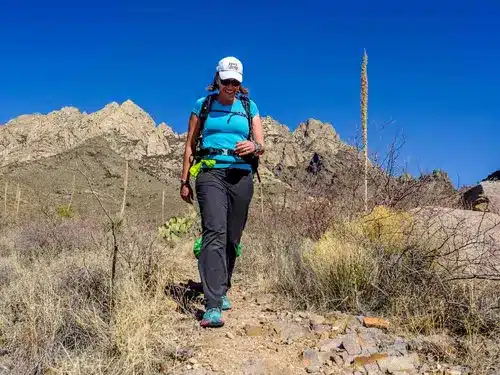
Each one increases the energy your body needs just to function—and most generic advice skips right over them.
Trail Tip: Know your hiking pace, mileage, and elevation gain before you start planning meals for your trip. These factors are the foundation for understanding how many calories you’ll need on trail.
Hiking Calorie Burn Rate Estimates
- Baseline calories burned: Based on MET (Metabolic Equivalent of Task) research, a 160-lb person hiking at a moderate pace burns around 430 kcal/hour (Compendium of Physical Activities).
- Trail grade: On steeper inclines (6–15%), calorie burn can jump from roughly 360 to 544 kcal/hour for a 150-lb hiker—versus about 360 kcal/hour on gentler slopes.
- Altitude: At 4,300 m, BMR has been shown to rise by 17–27%, with one study in women showing a 6.9% increase by day 3.
- Cold weather: In temperatures between 15–23 °F, a small study by NOLS found that hikers burned 34% more calories than those in mid-50℉.
These numbers are helpful starting points, but they don’t reflect the whole picture. What really matters is how these factors combine on your hike—which is where safety and performance come into play.
Why This Science Matters
All those numbers boil down to this: your burn rate can swing a lot with steep climbs, cold, and altitude. If you don’t account for those conditions when packing food, you can underfuel—leading to energy crashes, foggy decision-making, and even safety risks. That’s why your plan should match your actual route and conditions, not a generic daily number.
Underfueling increases the risk of poor judgment, a slow pace in adverse weather conditions, and difficulty staying warm. Calories aren’t just comfort—they’re part of your safety kit.
Learn from My Experience on the Trail
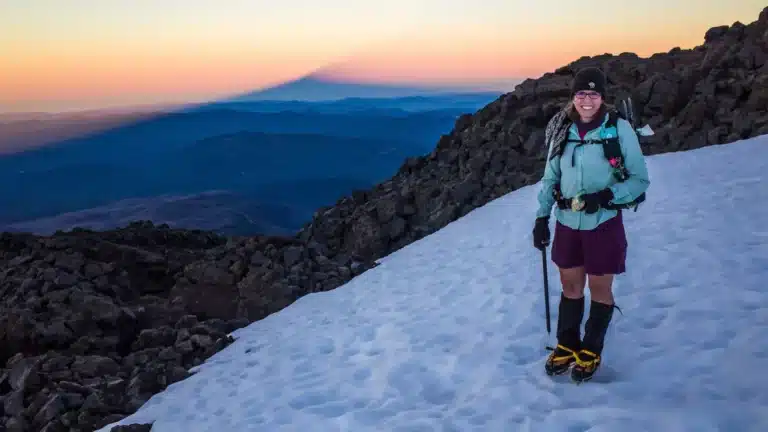
In my early backpacking days, I just assumed hiking was supposed to feel miserable. I’d end every trip sore, grouchy, and even tearful. On one memorable occasion—a hiking first date—I got so hungry that I sat down mid-trail and cried. No injury, no bad weather, just a total emotional crash. (Needless to say, it was also the last date.) Looking back, it wasn’t the hike itself that broke me—it was not eating enough. And that’s when I began to realize: food can make or break your experience on the trail.
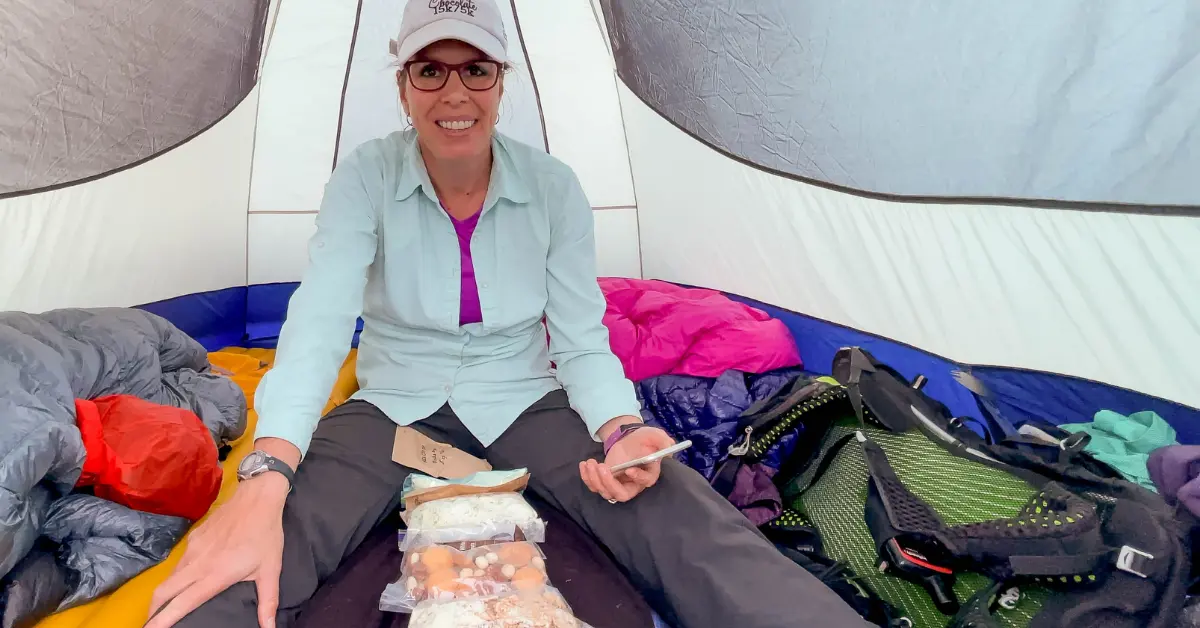
And it wasn’t the last time I learned that lesson. Years later, on my Pacific Crest Trail (PCT) attempt, I had built what I thought was the perfect food plan—but forgot to eat. On day three, I crashed so hard I couldn’t open a food package. My hands were shaking, and the fuel tank was empty. Luckily, a trail buddy helped me recover. If I’d been alone, it could have ended very differently.

This was the very bag of Raisin & Pecan Ramen (now known as Sunrise Ramen) that my trail buddy had to open for me on the PCT.
I had the food, but without eating it, my body shut down.
Takeaways from my mistakes…
Those experiences taught me that guessing—or relying on generic advice—just doesn’t cut it. Every hiker, every trip, and every condition is different. That’s exactly why I created a science-backed way to calculate your unique calorie needs, so you can head into the backcountry prepared instead of hoping you packed enough.
How to Calculate Hiking Calories Accurately
Generic fitness calculators won’t cut it on the trail. That’s why I built a hiking-specific calorie calculator that factors in conditions most tools ignore.
- Your weight and biological sex
- Daily distance, speed, and elevation gain
- Pack weight and how it shifts the effort
- Temperature and altitude changes
- Terrain resistance (e.g., sand vs. hard dirt)

Our calculator uses validated research, such as the Pandolf Load Equation, MET values, and field-tested trail data.
Trail Tip: GPS watches and fitness apps rarely account for pack weight, terrain, altitude, or temperature. That means their numbers can be off by hundreds of calories—a big deal when you’re counting on food to get you through.
Real-World Hiking Calorie Examples
How Variable Inputs Can Change Your Results
One important detail: the calculator works differently depending on whether you select day hike or overnight trip.
- Day hike: gives you an estimate of how many calories you’ll burn while actively hiking. This helps you plan how much food to pack just for the trail portion, since you’ll still eat breakfast at home or dinner after the hike.
- Overnight trip: gives you a 24-hour estimate that covers both hiking calories and your baseline needs. This helps you plan food for a full day on trail, since you won’t have access to meals at home.
Let’s look at an example using the same hiker:
Hike A (Day hike)
25-year-old woman, 135 lb, 6 miles, 10 lb pack, mild 60°F day, rolling hills
- Calories burned while hiking: ~900
- Full 24-hour need: ~2,600 (including baseline)
Hike B (Overnight trip)
Same person, 20 miles, 25 lb pack, 15% grade selected, cold 32°F day, high altitude
- Calories burned while hiking: ~2,700
- Full 24-hour need: ~4,200
That’s more than double the daily requirement—yet it’s the same hiker.
Mistakes to Avoid When Using a Hiking Calorie Calculator
Even with a great tool, results can be skewed if you enter extremes that don’t reflect your hike:
- Setting the temperature to 90°F or 30°F applies that extreme to the whole day, including when you’re sleeping or resting.
- Selecting a 15% grade tells the calculator you’re climbing steeply the entire hike—rarely the case.
Trail Tip: Be realistic with your inputs. If your hike spans extremes, average them out. I often pick a midpoint temp between midday highs and nighttime lows. Same for elevation—consider how much of the trail is steep versus rolling. By doing so, calorie estimates drop to a more realistic range instead of inflated numbers.
Download the Hiking Calorie Planning Guide
Feeling overwhelmed by the math?
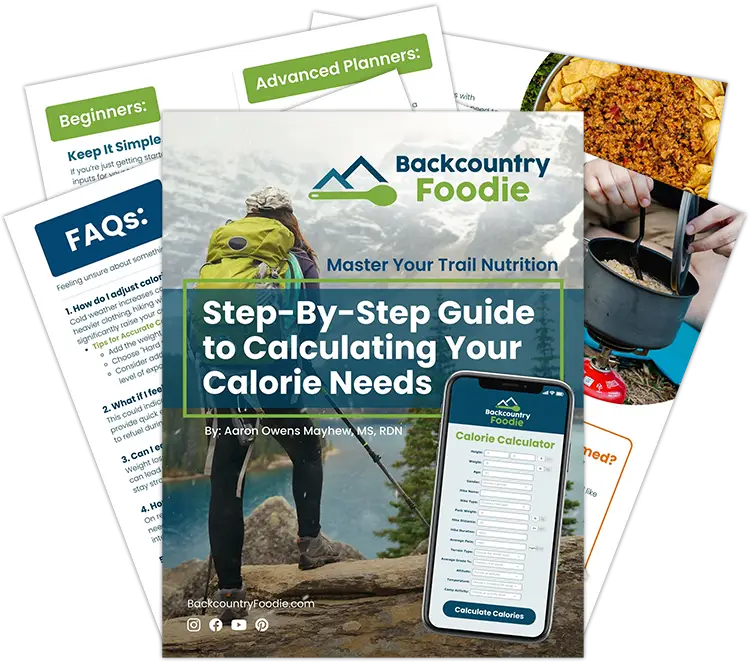
Don’t worry—you’re not alone. That’s exactly why I created a free How-To Guide that walks you through using the calculator step by step, with examples and a printable food journal. Download the guide using the form just below.
Why This Isn’t Just Another Free Download
This isn’t “just another free download.” It’s a step-by-step resource that shows you exactly how to use the calculator, avoid common mistakes, and plan meals with confidence.
This guide and subsequent newsletter give you:
- Step-by-step instructions on how to use the calculator properly
- Solutions to common hiking calorie mistakes
- A meal planning worksheet to simplify the process
- A printable hiking food journal for tracking your progress
Trail Tip: Most hikers say they wish they’d had this before their first trip. No pressure—it’s free, we never sell your info, and unsubscribe anytime.
Track and Improve with a Hiking Food Journal
Even with the best calculator, nothing replaces your own experience. That’s where a food journal comes in. Tracking what you eat and how you feel on each trip helps you spot patterns—like which snacks keep you energized, or which meals leave you sluggish. Over time, your notes become a personal playbook for packing smarter and hiking stronger.
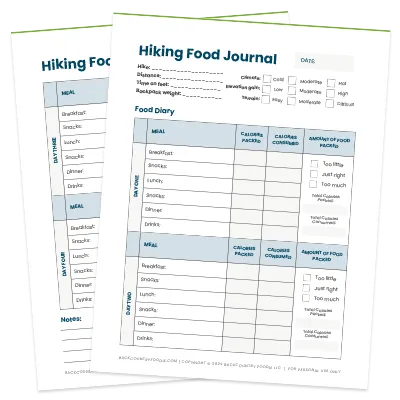
After each hike, write down:
- What you ate and how much
- How your energy and mood felt
- What foods worked or didn’t
- What changes you’d make next time
You’ll get better at dialing in your needs every time you hit the trail.
Trail Tip: We include a free printable journal with the Hiking Calorie Calculator Guide newsletter so you can start tracking right away.
Common Backpacking Nutrition Mistakes
Even with the right calorie estimate, it’s easy to stumble on the trail if you make these mistakes:
- Relying on calorie averages instead of personal needs
- Underestimating cold or high-altitude conditions
- Forgetting to snack regularly during big-mile days
- Packing high-calorie foods but skimping on carbs and protein
Trail Tip: Curious about balancing macros on trail? I break it down in my post on Fueling Farther Using the Goldilocks Approach.
Even With the Best Calorie Planning, Things Can Go Awry

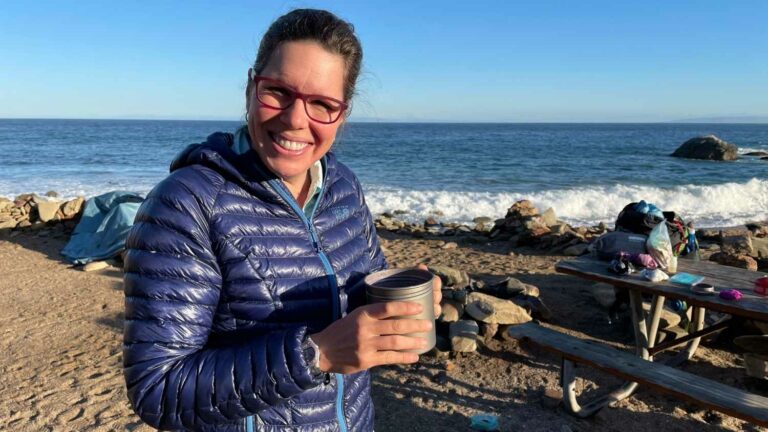
Here’s the truth… You can plan every detail, run the numbers, and still get surprised. On the Condor Trail—a rugged 400-mile route through Los Padres National Forest—I set out on what was supposed to be a 4-day trip. I did all the prep work (yes, that’s me with maps spread across the floor), packed carefully, and felt ready.
But the trail had other ideas. Sections were completely overgrown, and miles of creek walking slowed our pace; after three days, we’d only covered half the distance. That’s me in the white shirt, sitting on a dusty road at an early bailout point. We simply didn’t have enough food to stretch the trip to five days instead of four.
Had we pushed on, we’d have run out of food—and the trip would’ve gone from tough to miserable.
The lesson? Even with solid planning, flexibility is key. Trail conditions, weather, and terrain can all shift your calorie needs in ways no calculator can predict. That’s why a little buffer (and a lot of awareness) goes a long way.
FAQs: Hiking & Backpacking Calorie Planning
How many calories do you burn hiking per day?
- Most hikers burn 2,800–6,000+ calories per day, depending on body weight, distance, terrain, and climate. Longer mileage, heavier packs, and extreme conditions all push needs higher. Use our Hiking Calorie Calculator for a personalized estimate.
Why does cold weather or altitude increase calorie needs?
- Cold and altitude make your body work harder. In cold temps, you burn more to stay warm. At altitude, your basal metabolism can rise by 15–30% as your body adapts to thinner air.
- You can learn more about backpacking in cold weather in this post and high altitude hiking in this post. We also offer a High Altitude & Cold Weather Nutrition masterclass.
Do I need more calories for an overnight trip than for a day hike?
- Yes. Day hike estimates only cover calories burned while hiking. Overnight trip estimates cover a full 24-hour period, since you’ll also need meals you’d normally eat at home.
Do age or fitness level affect hiking calorie needs?
- Yes. Younger, heavier, and less conditioned hikers usually burn more calories per mile. As fitness improves, the body becomes more efficient—but pack weight, terrain, and weather still play bigger roles.
Is this calculator just for thru-hikers?
- No. It works for day hikes, weekend trips, and multi-week treks. Just select the right trip type to get an accurate estimate.
Can I use the Hiking Calorie Calculator to help me lose weight?
- As a dietitian, I always keep safety at the forefront. Restricting calories while hiking can increase the risk of bonking, poor decision-making, or getting too cold in harsh conditions.
- That said, if you’re tracking calories for weight management, the Hiking Calorie Calculator can show you how many calories you burned on your day hikes. True calorie restriction is best left for at-home routines, where your body doesn’t need the extra fuel for safety and performance.

Ready to Get It Right This Time?
Not every hiker or hike is the same—and your nutrition plans shouldn’t be either.
Use our Hiking Calorie Calculator to determine your unique calorie needs. Then download the Calorie Planning Guide to turn it into meals that power every mile.
After calculating your calories, try a few of our free recipes…
References
- Ainsworth BE et al. Compendium of Physical Activities: Classification of energy costs of human physical activities. Med Sci Sports Exerc. 1993.
- Pandolf KB et al. Predicting energy expenditure with loads while standing or walking very slowly. J Appl Physiol. 1977.
- Butterfield GE et al. Energy balance and metabolic rate at high altitude studied with doubly labeled water. Am J Clin Nutr. 1992.
- Ocobock C. Exercising in the cold burns more calories. STAT News, 2017 (reporting on a study of NOLS hikers).